

#1 source for any calendar needs
Develop success from failures. Discouragement and failure are two of the surest stepping stones to success.


An American lyricist, songwriter and musician.

An English cook and television presenter, known for teaching basic cookery skills in a no-nonsense style.

An English singer-songwriter and composer.

An American biophysicist, crystallographer who invented a mathematical formula that determines the molecular structure of crystals .
Frederick I, after consolidating his power in Germany and Italy, is crowned Holy Roman emperor by Pope Adrian IV in Rome.
Aroused by the impressments of American sailors into the British navy and eager to expand the country's western possessions, the U.S. Congress declares war against Britain to begin the War of 1812.
British, Prussian and Dutch troops led by the Duke of Wellington and Gebhard Leberecht von Blucher give French emperor and general Napoleon his final defeat at the Battle of Waterloo.
British Prime Minister Winston Churchill, speaking to the House of Commons before the Battle of Britain, says British resistance in the battle will be remembered as "their finest hour."
Sally Ride becomes the first American woman in space, aboard the space shuttle Challenger.
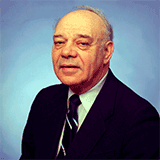
An American biophysicist, crystallographer who invented a mathematical formula that determines the molecular structure of crystals with his colleague Herbert Hauptman, American mathematician and crystallographer and won the Nobel Prize, was born on June 18, 1918, in New York, United States Karle. His earned his M.S. degree in 1943 and his Ph.D. degree in 1944 from the University of Michigan. Jerome Karle became chief scientist of the Naval Research Laboratory in 1968. From 1989 to 1991 Karle served as chairperson of the chemistry section for the National Academy of Sciences (NAS). Karle and Hauptman developed a way to measure the angles of the deflected beams. Their mathematical formula translated the dot pattern made by the deflected x rays into a map showing the exact position of atoms within the structure. Because its complicated mathematics were difficult for many crystallographers to grasp, Karle and Hauptman's method did not receive immediate support. Karle and Hauptman's technique was soon being used to determine the atomic structures of thousands of new compounds, including vitamins, hormones, and antibiotics. After receiving the Nobel Prize, he continued to work on mathematical methods for determining the structures of large molecules such as proteins and viruses. This technique, called the direct method, revolutionized chemical research by cutting from years to days the time necessary to work out atomic structures. It also enabled chemists and biologists to create many new drugs. For developing direct methods for the determination of crystal structure, Karle and Hauptman were awarded the 1985 Nobel Prize in chemistry, 30 years after their discovery.
He died on June 6, 2013, Annandale, Virginia, United States.
Author : Dr. Nidhi Jindal